01
Readiness and advisory
Assessment of workflows, data, governance, risk and cyber posture, with a build sequence that follows what the assessment found.
Projects are judged on what they deliver. We build the technology that ensures a project delivers its obligations. We support those accountable for it.
Assessment of workflows, data, governance, risk and cyber posture, with a build sequence that follows what the assessment found.
The structure that connects a capability requirement to what gets taught, how it is assessed, and the evidence that competence was reached. Designed so what is delivered can be traced to what was required.
The layer everything else is built on. We work inside your team to set it against the standards you are held to, so the structure fits the organisation rather than the other way round.
Design and build of AI enabled workflows, with owners, review points, access boundaries and audit trails designed in rather than added later.
We start alongside your people. What the obligations actually are, what evidence exists, and getting the record into a state that can carry weight.
Once the foundation holds, the technology goes in. It carries the load people cannot, across the whole record rather than a sample.
Human in the loop, meaning the system does the reading and the person accountable makes the call. Your people stop assembling evidence and start using it.
Defence defines systems assurance as justified confidence, supported by objective evidence, that a system functions as intended. Every regulated industry runs a version of that rule.
The method is framework agnostic. It is built for the standards an organisation is already held to, contractual, regulatory or statutory, and configurable to another jurisdiction without being rebuilt. In Australia that means working to the Commonwealth baseline, including the ISM, the Essential Eight and the PSPF, alongside international standards such as ISO 27001 and ISO 42001, and sitting inside an existing accreditation boundary rather than beside it. Elsewhere it is set to the equivalent.
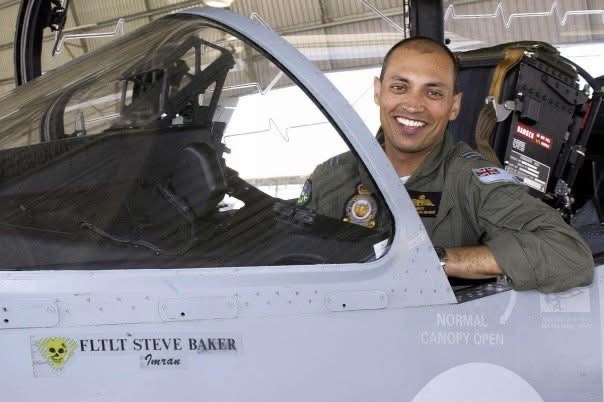
Autocom Solutions comes out of military aviation, where standards are not aspirational.
Thirty years of that discipline sits behind the method. Setting and holding flying standards across the Australian Defence Force. Working as the training authority inside major acquisition programmes, on the side of the customer who has to accept the capability and answer for it afterwards.
Aviation training is the strictest version of this problem, because the cost of assuming is immediate. Nothing counts because it was delivered. It is shown, someone qualified checks it, and they sign.
The company was built to bring that rule to organisations where the same discipline is required and the evidence is spread across thousands of pages.
In military aviation a standard is a defined level someone has to reach, checked by someone qualified to judge it. Not a target, not a goal.
A capability is accepted when it can be shown, not when it is claimed. That is the rule the acquisition system runs on, and the rule this company was built around.
Every check ends with a signature. Someone puts their name to it and can defend it later. Technology should make that easier, not obscure who is responsible.
We get project evidence into a state where it can be relied on, report what it does and does not support, and build the technology that holds that position between reviews.
Organisations that have to show their obligations were met rather than assert it. Defence acquisition and sustainment, resources and heavy industry, aviation, and any sector where a customer or regulator can ask for proof at a time you did not choose.
Those tools hold links that people created. They do not read the material or form a view on whether an obligation has actually been met. That judgement is what we produce.
Because nothing downstream works without it. A record that is inconsistent, unversioned or contradictory cannot be relied on, and no system fixes that by reading it harder.
Cyber and security uplift is delivered with partners where a client needs it, covering gap closure, policy evidence, staff training and incident exercises. It sits alongside the assurance work rather than inside it.
Time. Work that currently takes a team weeks of manual tracing, gap assessment and evidence chasing, done across the whole record. Your people stop assembling the position and start acting on it.
It reports that. The gap is marked and the reason it stopped is stated. It does not infer across a gap to produce a complete looking answer.
No. The method is not shaped by any one national or industry framework. It works to the one a project is held to.
We spend time with you first. Your data, your systems, your cyber posture, and how the work actually runs today. That happens on every engagement regardless of where it goes next, because nothing built on top of it holds otherwise.
What comes back is a plain picture of where the record actually stands. Where it is sound, where it is thin, and what has to change before anything can be built on it or assessed against it.
You get that as a written position, dimension by dimension, with the reasoning behind each one. What exists, what condition it is in, where the gaps are, and which of them matter enough to close before anything else is worth doing.
The work is done alongside your people rather than away from them, because the detail that matters is rarely written down anywhere.
A no obligation call to talk through where you are and what you are trying to achieve.
We will walk through how things work now, what is getting in the way, and what good would look like for you. That might be evidence you are struggling to pull together, a process that has grown beyond what it was built for, or an idea you want to test before committing to it.
By the end of it you will have a clearer view of where you stand, what a readiness look would cover in your case, and whether there is a sensible first piece of work in it. Most conversations end with a scope worth discussing or a clear reason there is not one yet.